
THE VELOCITY TRAP — A Scrum Story
Every Agile team talks about velocity. Some worship it. Some fear it. Some misunderstand it so deeply that it becomes a weapon rather than a tool. This is a story about a team that fell into that trap. A story of what happens when velocity stops being a forecasting mechanism and becomes a performance metric. A story of collapse. A story of two possible endings.
ITSCRUM
Sunny
11/28/202515 min read
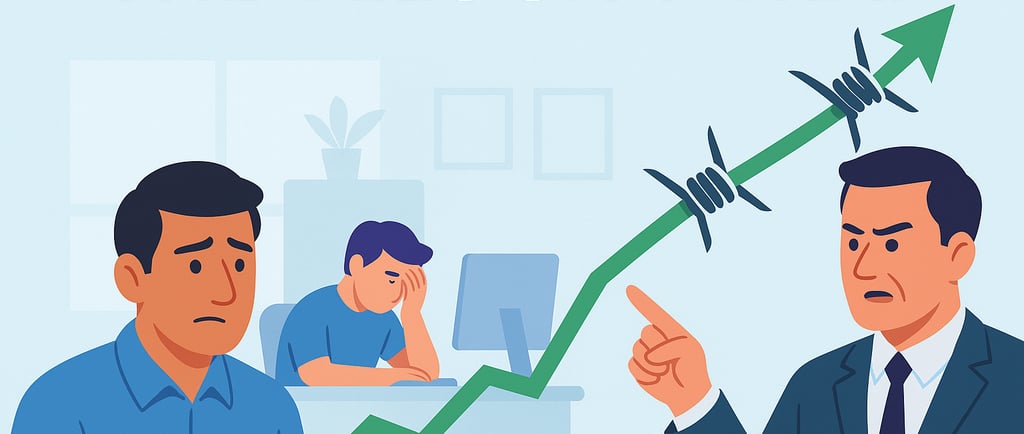

🌑 THE VELOCITY TRAP — A Scrum Story
A Story of Metrics, Fear, Collapse — and the Hard Road Back
Introduction
Every Agile team talks about velocity.
Some worship it.
Some fear it.
Some misunderstand it so deeply that it becomes a weapon rather than a tool.
This is a story about a team that fell into that trap.
A story of what happens when velocity stops being a forecasting mechanism and becomes a performance metric.
A story of collapse.
A story of two possible endings.


🌱 Act 1 — The New Scrum Master
Ravi arrived with enthusiasm glowing on his face.
He had just completed a Certified Scrum Master program, and everything he learned resonated deeply:
Agile is about people.
Trust is the foundation of delivery.
Velocity is for forecasting, not evaluation.
Fear kills honesty.
Transparency fuels improvement.
A Scrum Master protects, teaches, shields, guides.
He felt ready.
The team greeted him politely, though there was a faint stiffness in the air.
During introductions, Ravi casually asked:
“So, who was handling Scrum before me?”
A heavy pause. Glances. Avoidance.
Finally, someone answered:
“Arvind… he left.”
That was it. No elaboration. No explanation.
People didn’t talk about Arvind much. And the silence around him felt… practiced.
Ravi didn’t know it yet, but that silence was a warning.
🌤️ Act 2 — The First Two Sprints: Calm Before the Storm
The first two sprints were, frankly, beautiful.
Honest estimates
Steady delivery
Low bug count
Good collaboration
Healthy retrospectives
Real teamwork
Ravi felt validated.
He believed the best days were ahead.
He didn’t realize how fragile that calm really was.
⚡ Act 3 — The Pressure From Above
During the quarterly review, Ravi presented the sprint summary to his senior manager, Prakash.
Prakash frowned at the numbers.
“Ravi, why is your team delivering such low story points?”
Ravi smiled, ready with his well-practiced explanation:
“Story points aren’t comparable across teams—”
Prakash interrupted sharply.
“I don’t care about that Agile theory. Other teams deliver 120 points.
You’re at 45.”
Ravi tried again.
“Velocity is not—”
Prakash slammed his palm on the desk.
“From next sprint: velocity will be tied to performance KPIs. Bonuses.
Ratings. Salaries. I want higher numbers.”
Ravi’s heartbeat slowed. His chest tightened.
He walked out of that meeting with dread creeping into his soul.
He knew this was wrong. But he also needed his job.
He whispered to himself:
“Maybe it won’t be that bad…”
It was.
🌩️ Act 4 — Sprint Planning: The Day Everything Broke
The team gathered around the planning board.
Ravi stood at the front, exhausted.
He cleared his throat.
“Before we begin…
Velocity is now tied to your performance KPIs.”
Silence. The thick, suffocating kind.
He continued:
“Higher points = higher performance.”
Everyone froze. A pen dropped. A chair creaked.
No one protested. No one spoke. They didn’t have to.
Their faces said everything:
Fear
Stress
Survival mode
The death of honesty
Ravi felt the atmosphere shift violently.
🔥 Act 5 — The Meltdown
1. Story Points Inflate Overnight
Ravi tried to continue normally.
“Okay, first story: API integration. How many points?”
The senior dev answered too quickly:
“13.”
Ravi blinked. Last sprint, it was a 5.
Nobody questioned it. Not the lead.
Not the QA.
Not Ravi.
Because suddenly:
questioning = risking someone’s performance rating
honesty = hurting someone’s salary
challenging = being “difficult”
Everyone became careful. Too careful.
By the end of planning:
work that should have been 40 points magically became 95
no one smiled
no one joked
no one collaborated
Velocity had almost tripled in an hour.
But something invisible had been shattered.
2. Collaboration Dies
“Review my PR?”
“Can’t. Need to close my own stories.”
Helping someone else meant hurting yourself.
3. Ego Replaces Quality
Midway through the sprint, during late evening hours, Ravi noticed one developer, Karan, committing code unusually fast.
Lines of green on Git were flying.
Ravi approached gently:
“Karan, are you sure we don’t need tests for this module?”
Karan didn’t look up.
His jaw was set, eyes sharp, fingers typing fast.
“Ravi, trust me. I know my code. This will work.”
He said it with a mixture of:
pride
pressure
exhaustion
and a hint of defensiveness
Ravi hesitated.
He knew Karan was talented — one of the best on the team.
But he also saw the silent panic behind the confidence.
Karan continued:
“Look, I can’t afford to slow down right now.
If I stop to write tests, I’ll miss my story point target.
This story needs to go into Done.
The code is clean, trust me.”
His voice had an edge.
He wasn’t bragging — he was trying to survive.
Before Ravi could respond, Karan pushed another commit.
Then he muttered under his breath, almost like a confession:
“I’ll write the tests next sprint…
I just need these points now.”
Ravi felt a knot in his stomach.
He knew those tests would never happen.
4. Honesty Vanishes
A junior found a serious architectural flaw.
But she didn't say anything.
Her inner voice whispered:
“If I raise this…
we’ll have to take more points…
they’ll blame me…”
So she quietly pushed her story to Review.
She whispered, “Please don't break… please…”
5. The Jira Theatre Begins
Cards were dragged across the board at midnight.
Stories split unnaturally, re-estimated.
Points inflated.
Dashboards greener than they had ever been.
Velocity soared.
🌕 Act 6 — The Illusion of Success
The sprint review arrived.
The client joined the call —
camera off
- muted
- barely listening, distracted
Ravi demoed a happy path.
“Looks good. Approved.”
Prakash beamed:
“Excellent. This is the new standard.”
The team stared blankly.
Still smiling, Prakash added:
“Amazing work, team! You’ve exceeded expectations this sprint.
Let’s keep this momentum going.
I’ve ordered pizzas for everyone — you’ve earned it.
Remember — work hard, party harder!”
The team exchanged hollow glances.
Something felt wrong.
But everyone smiled anyway.
Silence felt safer.
No one said it, but everyone was glad the call was over.
🌖 Act 7 — Under Pressure
The next morning, as the team filtered into their seats, a sudden stillness spread across the room.
Nikhil sat frozen, staring at his screen.
A single email notification blinked at the top of his inbox:
Subject: Performance Improvement Plan – Discussion Scheduled
He opened it.
His eyes widened.
His breath caught.
Ravi noticed the change immediately.
He walked over slowly.
Nikhil’s voice trembled:
“Ravi… why would they… I… I finished everything I had…”
Word spread quietly through the room.
No one said it aloud, but everyone saw the line in the email:
“your individual contribution to completed story points was significantly lower than the team average…”
The office grew painfully silent.
Coffee mugs paused mid-air.
Chairs stopped rolling.
Even the air-conditioning hum felt louder.
No one dared look at each other, but everyone understood:
Velocity wasn’t just a metric anymore — it was a weapon.
By lunch, every developer inflated story points without hesitation.
Fear had finished what pressure had started.
🌘 Act 8 — Silent Sprint
This sprint passed with:
more inflated points
more skipped tests
more shortcuts
more fear-driven behavior
no collaboration
a fully green dashboard
no bugs (because no one reported any)
And strangely…
no bugs surfaced.
Silence became the team’s first language.
Prakash was thrilled:
“Two amazing sprints! Outstanding!”
Ravi forced a smile.
The team pretended to celebrate.
But they all felt it:
There is a disaster hiding under the surface.
And it is growing.
🌋 Act 9 — The Explosion (Sprint 3)
The next sprint began smoothly.
(Okay, the sprint numbering is a bit fuzzy here. Let’s just call it a “known issue.” We’ll fix it in a future sprint.)
For five days, nothing looked unusual.
Then day six arrived.
A customer reported:
duplicate transactions
corrupted data
API gateway failures
mobile app freezing
billing miscalculations
intermittent outages
They came from Sprint 1.
From the ego-driven “this will work”.
From the flaw the junior buried in fear.
From the rushed UI integration.
From the tests that never got written.
The ghosts of two sprints ago had come back to collect their debt.
They didn’t knock.
They didn’t warn.
And they came violently.
💥 Act 10 — The Firing
Prakash stormed in.
“Who wrote this garbage?!”
Ravi tried to speak.
“The team was under pressure—”
Prakash:
“Give. Me. The name.”
It was Karan.
He was fired the same day.
Badge deactivated.
Escorted out.
A brilliant engineer — sacrificed because of a bad metric.
The team watched, terrified.
Trust died completely.
🍂 Act 11 — The Split Path
More bugs surfaced.
More escalations.
The client complained:
“We are losing trust.
Delivery has become unstable.”
Leadership called Ravi into a meeting.
Everything now hinged on how leadership responded.
From here, the story splits into two endings.
🌑 ENDING A — The Tragic Ending
When leadership refuses to learn.
A1 — The Meeting of Blame
The escalation meeting room was cold—unnaturally so.
Ravi sat across from Prakash, the senior manager, who looked angrier than Ravi had ever seen him.
A few directors joined in, stiff and expressionless.
The projector displayed the angry client’s email:
“production issues”
“loss of customer trust”
“unstable releases”
“escalate to governing board”
Ravi breathed in and tried to explain:
“The issue came from code written two sprints ago, during the KPI pressure.
The team was afraid. They cut corners—”
Prakash slammed the table.
“Enough.”
Ravi stopped.
Prakash leaned back, tone icy.
“You were brought in to lead this team.
To improve velocity.
To deliver results.”
He highlighted the metrics on the screen:
Velocity shows two strong sprints
Cycle time “looks good”
Burndown charts perfect
Dashboard all green
He jabbed his finger at the screen:
“You told me everything was fine.
You let this happen.”
Ravi felt the walls closing in.
“I tried telling you velocity was the wrong metric—”
Prakash:
“Everyone uses velocity.
Are you saying you know better than management?”
Ravi felt the sting. He realized something in that moment:
This meeting wasn’t about truth. It was about finding a scapegoat.
Prakash’s voice hardened.
“Stop making excuses.
This happened under your watch.”
A director nodded coldly.
HR walked in quietly.
Ravi knew.
A2 — The Termination
“Ravi… we’ve decided to let you go.
This role needs someone with more experience.”
The room fell silent.
A hollow, ringing silence.
Ravi blinked.
Not shocked — just deeply, profoundly tired.
He spoke softly:
“You’re making the same mistake you made with Arvind.”
A few managers tensed.
Someone looked at the door.
Someone else looked at their shoes.
Prakash’s voice sharpened:
“Arvind left for personal reasons.”
Ravi stared at him and said nothing.
A3 — The Walk of Silence
Ravi packed his belongings slowly:
His notebook
His sticky notes
His Scrum certification file
The pens he liked
His water bottle
Developers didn’t speak.
They didn’t dare.
A junior whispered:
“It happened to Arvind, too.”
A senior dev murmured:
“It’s not your fault.”
Ravi forced a small smile.
“Take care of yourselves.”
He walked out.
His badge deactivated by the time he reached the elevator.
A4 — The Aftermath
Within a month:
three resignations
one junior left without notice
The client terminated the contract:
“Due to shifting business priorities, we will be transitioning away from this engagement.
We appreciate the work delivered.
Please treat the current sprint as the final one.”
Leadership never learned.
A new job posting appeared:
“Scrum Master needed. Must drive high velocity.”
The cycle continued.
The system stayed broken.
🌤️ ENDING B — The Correct Ending
When leadership finally listens.
B1 — The Turning Point
The escalation meeting began the same way:
angry email projected on the screen, Prakash fuming, directors stiff.
But this time, something different happened.
When Prakash interrupted Ravi, a new voice cut in.
A calm, authoritative voice.
“Let him speak.”
It was Meera — a director with a reputation for clarity and fairness.
The room went quiet.
Meera wasn’t loud. She didn’t need to be. Authority lived in her calm.
She nodded at Ravi.
“Explain what happened.”
Ravi breathed out slowly.
For the first time, someone invited honesty.
B2 — Ravi’s Truth
Ravi spoke clearly, not defensively about:
inflated points
collapsed trust
fear culture
shortcuts
disappearing quality
misuse of velocity
real Agile principles
The metrics looked green but were meaningless
He ended with:
“Velocity is not performance.
It was never meant to be.
We are punishing honesty and rewarding shortcuts.”
Silence.
Prakash opened his mouth to argue.
Meera raised her hand.
“He’s right.”
Everyone froze.
Then she says:
“Velocity should NEVER be a performance metric.
We caused this.”
Prakash looked stunned.
B3 — The Reset
Meera continued:
“We created this culture.
We pressured them.
We turned a forecasting metric into a performance target.
We caused this failure.”
Not a single person looked at her directly.
Shame spread through the room.
She stood.
“Stop everything.
Effective immediately, Velocity is removed from KPIs.
Reset story points.
Quality metrics and customer outcomes will replace numeric vanity metrics.”
Ravi felt a weight lift from his chest.
Meera wasn’t done.
“And we rebuild the team’s trust.
That starts today.”
B4 — Healing Begins
Ravi didn’t start the next sprint with planning.
He started with a retrospective.
A special one.
A healing one.
The team entered the room quietly, expecting another uncomfortable post-mortem.
They sat down slowly.
Nobody spoke.
Ravi stood at the front of the room, hands clasped, voice calm but steady.
He said:
“Before we begin…
I want to make something very clear.
Velocity is no longer tied to performance KPIs.”
The room didn’t react at first.
People blinked.
Someone exhaled.
Another lowered their shoulders, tension visibly leaving their body.
He continued:
“Your bonuses, raises, appraisals — none of it will depend on story points.
Velocity is only for planning.
Not judgment.
Not pressure.”
A silence followed — but it wasn’t the fear-filled silence of the past.
It was the silence of relief.
Someone finally whispered:
“…thank you.”
Ravi nodded.
Now the real retrospective could begin.
1. The Retrospective — Truth Without Fear
Ravi placed sticky notes across the table with prompts:
“What scared you?”
“What did you hide?”
“What did you stop doing?”
“What broke inside you?”
He said:
“Today isn’t about blame.
It’s about truth — and healing.”
A developer spoke first, tentatively:
“I inflated story points because…
I didn’t want to be rated low.”
Another confessed:
“I hid bugs for days.
I didn’t want to be the one slowing the team down.”
A third said:
“I stopped testing.
I was so afraid of missing my points.”
A junior dev’s voice cracked:
“I felt like if I made one more mistake…
I’d be fired like Karan.”
Ravi listened.
Really listened.
He didn’t correct them.
He didn’t defend management.
He didn’t justify the past.
He simply said:
“Thank you.
Your honesty is the foundation of our recovery.”
And for the first time in weeks,
people looked at him with something other than fear.
They looked with hope.
2. Story Points Reset — Taking Back Control
Ravi rolled the physical task board into the room.
He erased everything:
inflated numbers
pressure-driven estimates
the distorted velocity graph
A blank board now stared back at them.
He said:
“These numbers don’t represent us.
Let’s start again.”
They picked five reference stories from much earlier sprints —
stories they remembered
and completed
and felt honest about.
Together, they debated:
What truly makes a story a 2?
What’s the difference between a 3 and a 5?
Should 13 even exist?
The debate grew lively.
For the first time in many days,
someone laughed.
Not nervously.
Genuinely.
This wasn’t just recalibrating points.
It was a symbolic reclaiming of their process.
The team wasn’t surviving anymore.
They were taking ownership again.
3. Collaboration Returns — One Small Step at a Time
Ravi didn’t demand collaboration.
He invited it.
He started with:
“Anyone want to pair on this tricky backend task?”
A senior dev said:
“Yeah, I’ll pair with Meena.”
Meena — the junior who had once hidden the architectural flaw — smiled nervously and nodded.
Two hours later, they solved a deadlock issue together.
Meena grinned:
“I learned more today than in the last three sprints.”
And she meant it.
That moment — small but meaningful —
signaled that collaboration was returning.
Not forced.
Not imposed.
Chosen.
4. Quality Rebuilds — Slowly, Peacefully
Ravi didn’t demand:
“Get back to full test coverage!”
He simply said:
“Let’s write one valuable test per story.”
That was enough.
Developers wrote:
one unit test
then another
then two
then more
Tests grew naturally.
Not out of fear.
Out of pride.
A senior dev said:
“Feels good to write good code again.”
Ravi felt his heart expand a little.
5. Real Technical Conversations Come Back
Fear kills dialogue.
Safety revives it.
Ravi reopened:
Architecture meetings
Refactoring hours
Whiteboard design sessions
No one rushed them.
No one panicked.
No one watched the clock nervously worrying about points.
Developers argued politely, challenged ideas, sketched diagrams, debated patterns.
One said:
“I’ve missed this.”
6. Psychological Safety Returns
Slowly, unmistakably,
the atmosphere changed.
The junior dev who once hid issues,
now spoke up quickly:
“I think this might break under load.
Can we fix it early?”
Nobody scolded her.
Nobody judged.
The team simply said:
“Good catch. Let’s fix it.”
This is how psychological safety sounds.
This is how Agile truly works.
7. The Unspoken Name Is Finally Spoken
A week later, during a retrospective,
a developer finally said:
“…this is what Arvind tried to do.”
The room went silent.
Not in fear.
In respect.
Another developer added:
“He didn’t stand a chance under that old system.”
Ravi didn’t respond with curiosity or interrogation.
He simply said:
“Then let’s make sure the cycle ends with us.”
And in that moment,
the team felt united —
in purpose,
in healing,
in identity.
8. Talking to the Client — With Courage, Not Theatre
Ravi scheduled a call with the client.
He spoke honestly:
“We made mistakes.
We pushed the team too hard.
We tied performance to a metric that never should’ve been used.
We’ve reset.
And we’re rebuilding integrity into our process.”
The client was quiet.
Then said:
“Thank you for being transparent.
Few teams are.”
They gave the team another chance.
A real chance.
9. Pride Returns — Quietly, Then Loudly
The next release had:
zero major bugs
stable migrations
predictable delivery
clean code
real velocity (not inflated velocity)
early warnings instead of hidden landmines
After deployment,
a junior dev whispered:
“I’m proud of this.”
Another replied:
“Yeah… me too.”
Ravi felt something shift deeply inside.
This was not relief.
This was healing.
10. True Recovery Is Slow — But It Lasts
Weeks turned into months.
And the team blossomed:
trust became normal
questions flowed freely
code quality stabilized
innovation returned
developers volunteered to mentor others
cycle time dropped
technical debt shrank
This wasn’t the same team that had collapsed under pressure.
This was a reborn team.
A team rebuilt by honesty.
By humility.
By courage.
By safety.
By learning.
A team that would never again let velocity become a weapon.
B5 — The Client’s Surprise
By the end of two sprints:
fewer bugs
stable releases
predictable delivery
honest estimates
improved customer experience
The client sent an unexpected message:
“The stability and transparency over the last two sprints have been excellent.
We appreciate the improvement.”
Prakash read the email quietly.
Something changed in his eyes —
humility, maybe.
Or understanding.
He approached Ravi afterward.
Not arrogantly.
Not angrily.
But sincerely.
“I… misjudged velocity.
You were right.”
Ravi didn’t gloat.
He simply nodded.
“Let’s do it right from here.”
B6 — A Better Future
Months later:
The team became one of the most respected units
Knowledge-sharing flourished
People volunteered for mentoring
Story points normalized
Lead time dropped
Quality soared
The project became a model for healthy Agile adoption.
And the mystery of Arvind?
People didn’t talk about him still.
But they didn’t need to.
His ghost no longer haunted the team.
Because this time…
the cycle was broken.
Ravi stayed.
The team stayed.
The client stayed.
Agile lived.
🧠 What This Story Teaches
✔ Velocity is a planning tool — not a performance measure
✔ Fear destroys quality
✔ Shortcuts accumulate silently
✔ Metrics can kill trust
✔ The illusion of progress is dangerous
✔ Psychological safety is the foundation of Agile
✔ Recovery is slow — but possible
✔ Leadership can either destroy or protect teams
✔ Pressure without empathy always breaks systems
🌟 Final Reflection
Arvind disappeared quietly.
Ravi almost followed him.
The team nearly collapsed.
A client nearly walked away.
The journey left scars — some deeper than anyone wanted to admit.
No process can erase what happened to people like Nikhil and Karan.
All because velocity — a harmless planning number —
was turned into a weapon.
Agile does not fail people.
People fail Agile
when they misunderstand it.
Velocity is not a whip.
It is not a scoreboard.
It is not a KPI.
It is a compass.
And a compass only works
when the people following it
are allowed to walk without fear.
✍️ Personal Note from the Author
I’ve been programming since 1998 — first as a curious student who loved the magic of building things on a computer. I started my professional journey in 2006, and as of today, I’ve spent 19 years working in the software industry and 27 years writing code if I include my student days.
Across startups, enterprises, consulting, and long-term projects, I’ve seen teams flourish and I’ve seen teams collapse. This story is fictional, but the experiences, behaviors, and consequences described here are very real.
I’ve lived through environments where fear replaced trust, and I’ve also seen teams rebuild themselves through courage, safety, and humility.
I hope this story helps leaders, developers, and teams reflect on how powerful our metrics can be — and how easily they can be weaponised if we forget the human beings behind the numbers.
— Sunny
If this story resonated with you 👉 Buy me a coffee
Only interested in new Articles
© 2025. All rights reserved.
For Discussions/Suggestions/Community
Be part of an engaging community where we discuss topics ranging from AI to Agile, Scrum practices, and software development challenges. Whether you’re looking to share your insights, ask questions, or simply keep up with the latest conversations, our Google Group is the place to connect.