
Creating a Balanced AI Ecosystem: Lessons from Economics
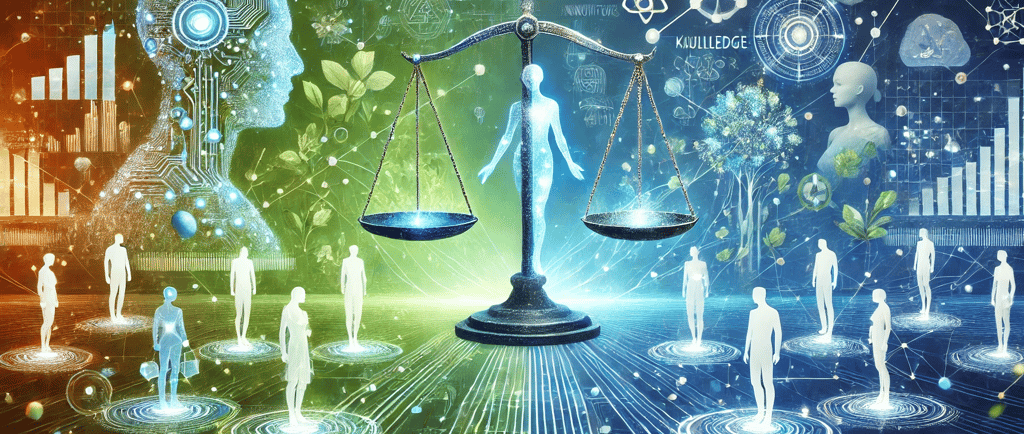
In a capitalist world, wealth has historically been seen as a metric of success, but when concentrated too heavily in the hands of a few, it risks destabilizing the entire economic system. The same principles apply to artificial intelligence (AI), which thrives on a rich and diverse foundation of knowledge produced by human creators. But what happens when AI’s growth and wealth are centralized, displacing jobs and leaving creators unrewarded? This article explores the economic and ethical issues of AI development and outlines how fair compensation and auditing can ensure a sustainable future.
AIECONOMICS
Sunny Narula
9/11/20245 min read
Money and Value: The Paradox of Concentration
To understand the implications of AI’s impact on jobs and creators, we must first examine the parallels with the capitalist economy. In a healthy system, money is valuable because it circulates—it is used to exchange goods and services, creating a balanced economy. But what happens when wealth is concentrated in the hands of just a few?
If one person monopolized all the money, they would face a unique dilemma: even with vast resources, they wouldn’t be able to purchase basic necessities like bread because others wouldn’t have the means to produce or sell it. The true value of money lies in its ability to act as a medium for exchange, which requires wealth to be distributed across society. Without that, money ceases to function, and the economy grinds to a halt.
The same applies to AI. The technology feeds on human-created data and knowledge, but if creators are not compensated or supported, the flow of fresh, quality data will eventually dry up. AI’s success is rooted in the diversity and dynamism of the knowledge it processes—without new information, it will stagnate, and its value will diminish. Like a monetary system that collapses when wealth is too concentrated, AI risks undermining its growth if it does not distribute the rewards of its success.
Job Displacement: The AI Dilemma
One of the most direct impacts of AI is the displacement of human jobs. Automation, powered by AI, is transforming industries, from manufacturing to creative sectors like writing, art, and music. Machines are increasingly capable of doing the work of humans, leading to widespread concern about unemployment.
As AI systems continue to take over tasks traditionally performed by humans, the number of people with stable, well-paying jobs is expected to shrink. When people lose jobs, they also lose purchasing power. This raises a crucial question: if people are losing their jobs to AI, who will be left to buy AI products and services?
If the consumer base shrinks, AI companies themselves will feel the impact. The system, much like in capitalism, will face a paradox: it may generate immense value, but with fewer people able to participate in the economy, the value of AI services will diminish. This highlights the need for AI companies to consider the long-term implications of displacing jobs without addressing the socioeconomic effects on the broader population.
The Ethical Challenge: Fair Compensation for Knowledge Creators
The ethical dimension of this issue is equally troubling. Currently, AI systems are trained on vast amounts of data sourced from the internet—articles, books, research papers, art, and more. In most cases, the creators of this knowledge are not compensated when AI uses their work. Tech companies generate immense profit by leveraging this free knowledge, but the individuals who created it see little or no reward.
This mirrors the problem of wealth inequality in capitalism. Just as the wealthiest in society benefit from the labor of others without fair distribution of rewards, AI systems are built on the efforts of countless human creators who receive no compensation. Over time, this could lead to the exploitation of knowledge workers, undermining the ethical integrity of the AI industry.
If creators are not compensated, they will have less incentive to produce new knowledge. This could lead to a stagnation in the quality and quantity of data available for AI systems, ultimately slowing innovation. Like a capitalist economy that collapses when wealth is hoarded, AI will suffer if it fails to reward those who enable its growth.
Auditing and Proportional Compensation: Building a Fair AI Ecosystem
To address the imbalance between AI's growth and the lack of fair compensation for knowledge creators, we need a system that tracks AI's usage of data and compensates creators accordingly. Auditing, in this context, serves as a crucial mechanism not only for transparency but for ensuring that AI systems operate ethically and fairly.
Primary Benefit: Fair Compensation
The primary role of auditing in AI would be to track every instance of knowledge usage, ensuring creators are compensated fairly and proportionally. These audits would be conducted internally, where the AI system logs how often specific data is used, similar to how royalties are calculated in creative industries.
To preserve the privacy of proprietary models, only the internal auditing processes—rather than the actual AI models or data—would be subject to review by third-party auditors. This ensures that the company maintains confidentiality while still providing transparency around data usage.
As AI systems grow, these audits will encourage responsible development by creating verifiable records of knowledge usage. This system will also motivate creators to keep contributing high-quality data, which is essential to sustaining AI development and preventing stagnation.
Other Benefits of Auditing AI Systems
Ensuring Transparency
One of the biggest challenges in AI is understanding how decisions are made, particularly in complex models like neural networks. Auditing makes these systems more transparent by documenting how they process information. This transparency builds trust among users and regulatory bodies, allowing AI companies to demonstrate that their systems are functioning as expected.Mitigating Bias and Ethical Risks
Auditing also plays a critical role in identifying and mitigating biases within AI models. AI systems often unintentionally perpetuate biases that exist in their training data. By auditing the algorithms and data sets regularly, companies can catch and correct these issues early, preventing harmful societal impacts. This is essential for ensuring fairness in systems that make decisions affecting people’s lives, such as hiring, lending, and criminal justice.Accountability in High-Stakes Scenarios
AI is being used in high-stakes environments like healthcare, finance, and law enforcement, where errors can have significant consequences. Auditing ensures that these systems remain accountable, providing a clear record of how decisions were made and enabling error correction. This kind of oversight is crucial for compliance with legal and ethical standards, which will likely be increasingly enforced as AI becomes more integral to these fields.
Incorporating these side benefits makes auditing an indispensable tool not only for compensating knowledge creators but also for maintaining ethical standards, accountability, and trust in AI systems. As AI continues to play a larger role in society, the need for robust and transparent auditing practices becomes critical to ensure its development is inclusive, equitable, and benefits everyone.
The Ethical Trajectory: Where Does the Current System Lead?
If we continue down the path of unchecked AI development without addressing these ethical and economic concerns, we risk creating a system where the few benefit immensely while the many suffer. This mirrors the problems of wealth inequality and exploitation seen in modern capitalism. AI, much like wealth, becomes less valuable if the ecosystem supporting it is not maintained.
Historically, economic systems that fail to balance the distribution of wealth lead to social unrest, inequality, and eventual collapse. The same could happen to the AI industry if it continues to extract value from human creators without compensating them fairly. The ethical trajectory of the current system, if left unchecked, leads to a future where innovation is stifled, creators are exploited, and AI becomes a source of inequality rather than progress.
Conclusion: A Balanced Future for AI and Capitalism
Both the capitalist economy and the AI industry share a common thread: they rely on the contributions of many to fuel the success of a few. To ensure the long-term viability of both systems, we must prioritize fair compensation, transparency, and ethical practices. Just as wealth needs to be distributed to maintain a healthy economy, AI must distribute rewards to the creators who fuel its success.
By introducing audit-able, proportional compensation systems and addressing the socioeconomic impact of job displacement, we can build a future where AI serves everyone—not just the few at the top. Like any economic system, AI must find a balance between growth and sustainability, ensuring that its knowledge creators and displaced workers are part of its success story. Only then can we realize the full potential of AI in a way that benefits society as a whole.
Support Us
If you liked this article, please consider donating to us to help keep us going. We support donations in major currencies.
Share this article with friends
Only interested in new Articles
© 2025. All rights reserved.
For Discussions/Suggestions/Community
Be part of an engaging community where we discuss topics ranging from AI to Agile, Scrum practices, and software development challenges. Whether you’re looking to share your insights, ask questions, or simply keep up with the latest conversations, our Google Group is the place to connect.